
Measuring Checkout Conversion with a Simple Funnel
By PayEurasia Editorial Team · 14 October 2026 · 2 min read
Last updated 14 October 2026
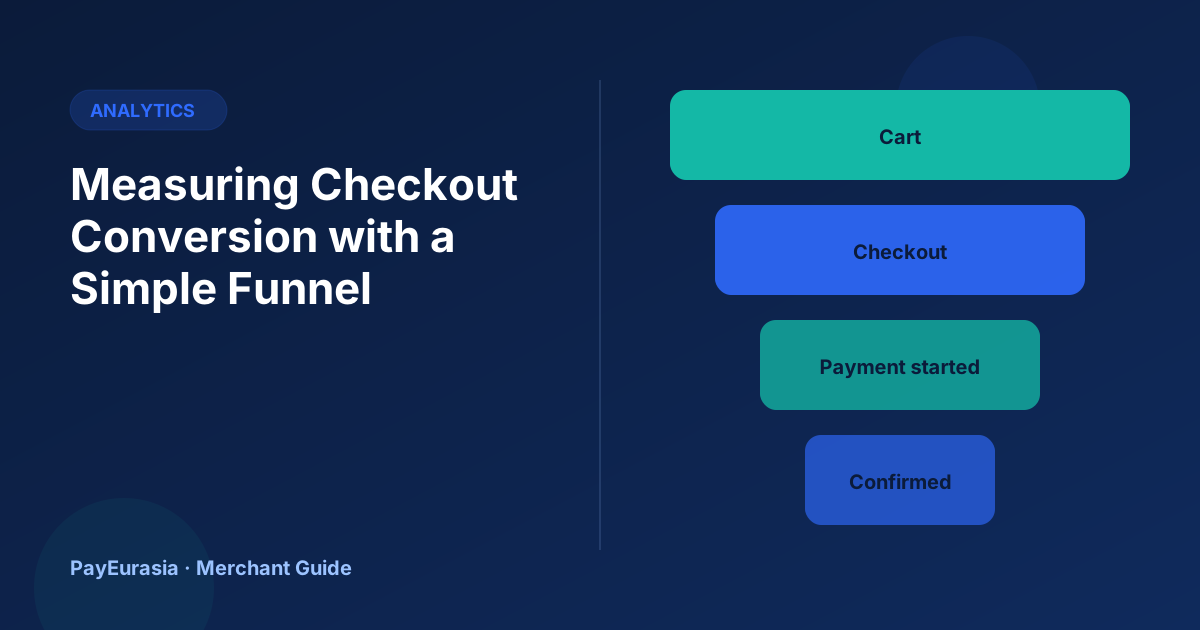
How merchants can build a simple checkout funnel from cart to confirmed payment, find where customers drop off and avoid common measurement mistakes.
The short answer
A useful checkout funnel has four or five steps you can count reliably: cart, checkout started, payment started, payment confirmed and, optionally, order fulfilled. Count each step from your own records, compare the drop between steps, and look at the biggest drop first. The key is using confirmed payment, not page visits, as the final step.
The basic funnel
- Cart viewed: customer has items in the cart.
- Checkout started: customer begins entering details.
- Payment started: customer taps Pay and is sent to the provider.
- Payment confirmed: provider confirms payment.
- Fulfilled: order delivered or collected (optional).
Where to get the numbers
Use your order system and provider reports for steps 3 and 4. Use your analytics tool for steps 1 and 2. Do not rely only on "thank you" page visits; many customers never return from the wallet app.
Reading the funnel
- Big drop from cart to checkout: shipping costs, forced accounts, or uncertainty about delivery.
- Big drop from checkout to payment started: long forms, confusing method choice, unexpected totals.
- Big drop from payment started to confirmed: provider issues, wallet handoff problems, declines or customers changing their minds.
Break it down
Split the funnel by device, payment method, new vs returning customers and region. A drop that is average overall may be severe for one segment.
Common mistakes
- Counting payment retries as separate customers.
- Mixing time zones so steps fall on different days.
- Ignoring pending payments that confirm later.
- Comparing weeks with different promotions without noting it.
A simple weekly report
- Checkout started: this week: 1,000; last week: 950
- Payment started: this week: 700; last week: 690
- Payment confirmed: this week: 560; last week: 580
Here, confirmations fell while starts rose. That points to the payment step, so check provider status and method-level success rates.
Turning findings into actions
A funnel only matters if it leads to changes. For the biggest drop, list possible causes, pick the most likely one, make a single change and watch the funnel for a few weeks. For example, if many customers stop between checkout and payment, try showing the delivery charge earlier. Write down each change with its date so you can link later movements in the funnel to what you did.
Combine numbers with customer voice
Support messages, reviews and short surveys explain why customers leave. Read a sample each week alongside the funnel; numbers show where customers stop, and comments often explain why.
Keep definitions stable
Write down exactly how each step is counted and keep it fixed. If you change a definition, note the date, because the funnel before and after will not be comparable.
Frequently asked questions
What is a good conversion rate?
It varies widely by product and market. Compare against your own history rather than generic benchmarks.
How often should I check the funnel?
Weekly for trends, and daily during big sales.
To discuss collection options, contact PayEurasia.
Talk to PayEurasia
Working in a high-risk vertical across South Asia? We can probably help.
Request integration →