
Customer Identity Verification at Checkout: When to Escalate to Review
By PayEurasia Editorial Team · 14 October 2026 · 2 min read
Last updated 14 October 2026
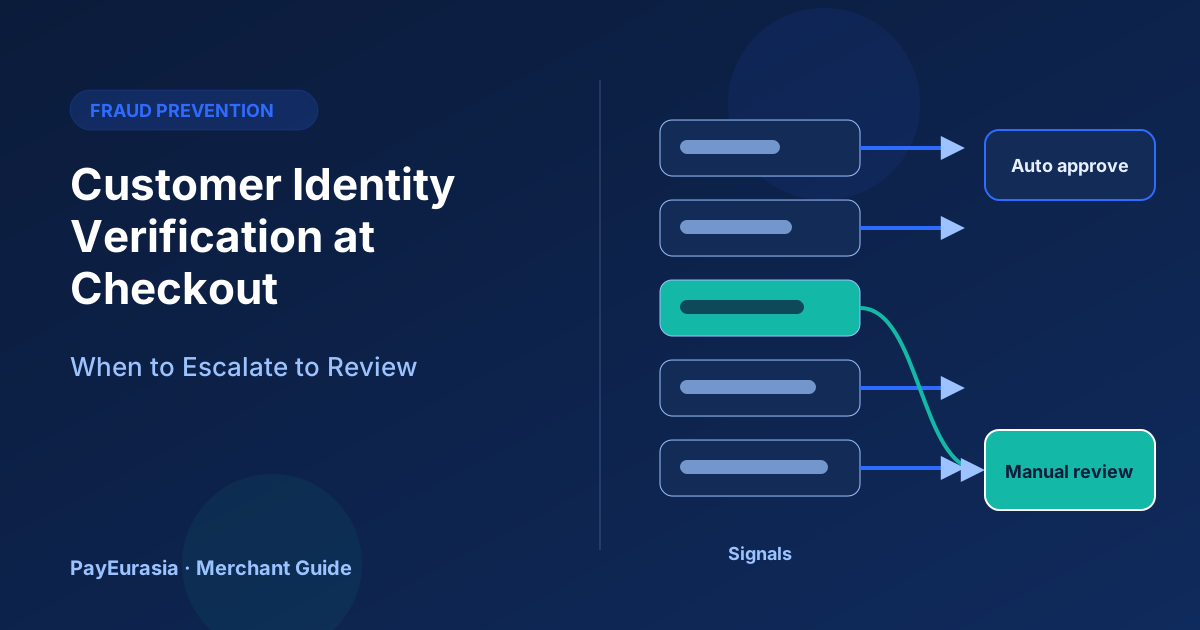
How merchants can decide when an order needs extra verification or manual review, using proportionate signals, without collecting unnecessary identity data or blocking genuine customers.
The short answer
Most orders do not need identity checks beyond what the payment provider already performs. Escalate an order to manual review only when proportionate signals suggest risk, such as an unusually high value, mismatched details or repeated failed attempts, and keep the review light: a call, a confirmation message or a request to collect in person. Avoid collecting identity documents unless there is a clear requirement and a secure process.
Who does what
Your payment provider handles authentication for the payment itself, such as wallet approval or card checks. Your job is to decide whether to fulfil the order. These are different questions.
Signals worth reviewing
- Order value far above your normal range.
- Delivery address far from the billing or usual area, combined with high value.
- Several failed payment attempts with different methods.
- Many orders from one contact in a short time.
- Items commonly resold, ordered in large quantities.
- Contact details that do not work.
No single signal proves fraud. Combine them and set thresholds based on your own history.
Proportionate review steps
- Call or message the customer to confirm the order.
- Ask for delivery confirmation details.
- Offer collection in person or cash on delivery instead of prepaid shipping.
- Delay dispatch until payment is fully settled, if appropriate.
Request identity documents only where there is a legal or provider requirement and a secure way to handle them. Never request PINs or OTPs.
Avoid harming genuine customers
- Do not cancel orders silently; explain politely.
- Avoid rules that target customers by name or neighbourhood without evidence.
- Review outcomes: if most flagged orders are genuine, adjust thresholds.
Recording decisions
Note why an order was reviewed, what was done and the outcome. This helps refine rules and answer disputes.
Scenario
An electronics store flags all orders above a high value for a confirmation call. Most are genuine and confirmed in minutes. A few customers cannot be reached and the orders are cancelled with a refund. Losses from fraudulent orders fall without slowing ordinary sales.
Reviewing your rules
Every few months, look at the orders your rules flagged and what happened: genuine, fraudulent or unknown. Tighten rules that miss fraud and relax those that mostly catch genuine customers. Share findings with support staff so they understand why some orders are delayed and can explain it to customers politely.
Also check how long reviews take; a rule that delays genuine orders for days may cost more than the fraud it prevents.
Frequently asked questions
Should I ask every customer for ID?
Usually not; it adds friction and data risk without clear benefit.
Can automation help?
Simple rules in your store or provider tools can flag orders, but keep a human decision for unclear cases.
To discuss risk-aware collection options, contact PayEurasia.
Talk to PayEurasia
Working in a high-risk vertical across South Asia? We can probably help.
Request integration →