
Payment Receipts: The Details Customers and Finance Teams Need
By PayEurasia Editorial Team · 14 October 2026 · 2 min read
Last updated 14 October 2026
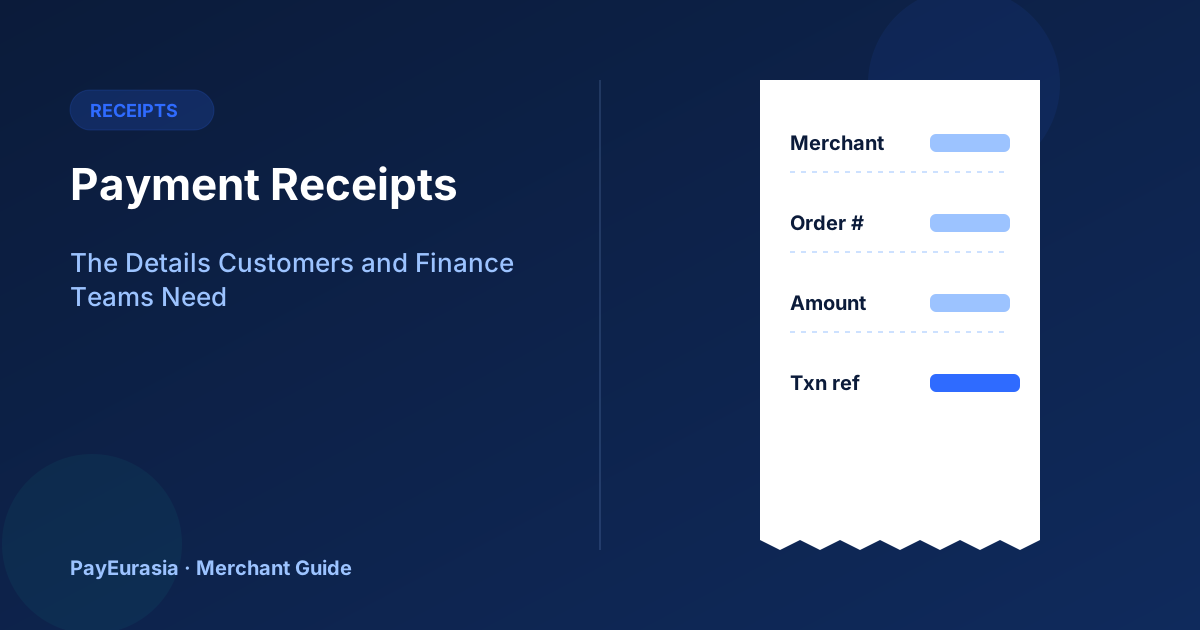
What a useful payment receipt should contain for customers, accountants and support teams, with a sample layout and common mistakes to avoid.
The short answer
A good receipt lets a customer prove what they paid, lets your finance team match it to the payment report, and lets support answer questions quickly. It should include your business name, order or invoice number, date and time, items, amount paid, payment method, the provider's transaction reference and any remaining balance or refund.
What to include
- Business identity: legal or trading name as it appears on statements, contact details.
- Order or invoice number: the reference customers use when contacting you.
- Date and time: with time zone if you serve several regions.
- Items or service: with quantities and prices.
- Charges: delivery, fees, taxes and discounts.
- Amount paid and currency.
- Payment method: for example "Mobile wallet" or "Card ending 1234".
- Transaction reference: from the provider.
- Status: paid in full, deposit, partial, refunded.
- Balance or next steps: remaining amount, delivery date.
What not to include
Do not include full card numbers, wallet PINs, OTPs or unnecessary personal data. Mask phone numbers if receipts may be forwarded.
Receipts vs invoices
An invoice asks for payment; a receipt confirms it. Do not send a document titled "Receipt" before payment is confirmed.
Partial payments and refunds
For deposits and staged payments, send a receipt for each payment showing what remains. For refunds, send a refund confirmation linked to the original order.
Delivery channels
Email, SMS and messaging apps all work. Keep a copy in your system so you can resend. If messages fail to deliver, see receipt delivery failures.
Sample layout
- Header: business name, logo, contact
- Receipt number and date
- Customer name
- Order details table
- Charges and total
- Payment method, transaction reference, status
- Refund policy link and support contact
Finance team benefits
When the transaction reference appears on the receipt and in your records, monthly reconciliation becomes a matching exercise instead of a search.
Numbering receipts
Give receipts their own sequential numbers, separate from order numbers, if your accounting needs them. Never reuse a receipt number. If a receipt contains a mistake, issue a corrected receipt that refers to the original rather than editing the original file, so customers and auditors see a clear history.
Common receipt mistakes
- Sending a receipt before payment is confirmed.
- Showing a different total from the payment page.
- Missing the transaction reference, which makes support searches slow.
- Using a sender name customers do not recognise, so the email is ignored or marked as spam.
Testing receipts
Each time you change a template, send a test receipt for a full payment, a deposit, a partial refund and a full refund. Check that each version shows the right status and balance on a phone screen as well as on a computer.
Frequently asked questions
Do I need to show tax details?
That depends on your tax registration and local rules. Ask your accountant.
Can receipts be in Bangla?
Yes. Keep numbers, references and dates in a consistent format.
To discuss collection options, contact PayEurasia.
Talk to PayEurasia
Working in a high-risk vertical across South Asia? We can probably help.
Request integration →