
Collecting Partial Advance Payments for Custom Orders
By PayEurasia Editorial Team · 14 October 2026 · 2 min read
Last updated 14 October 2026
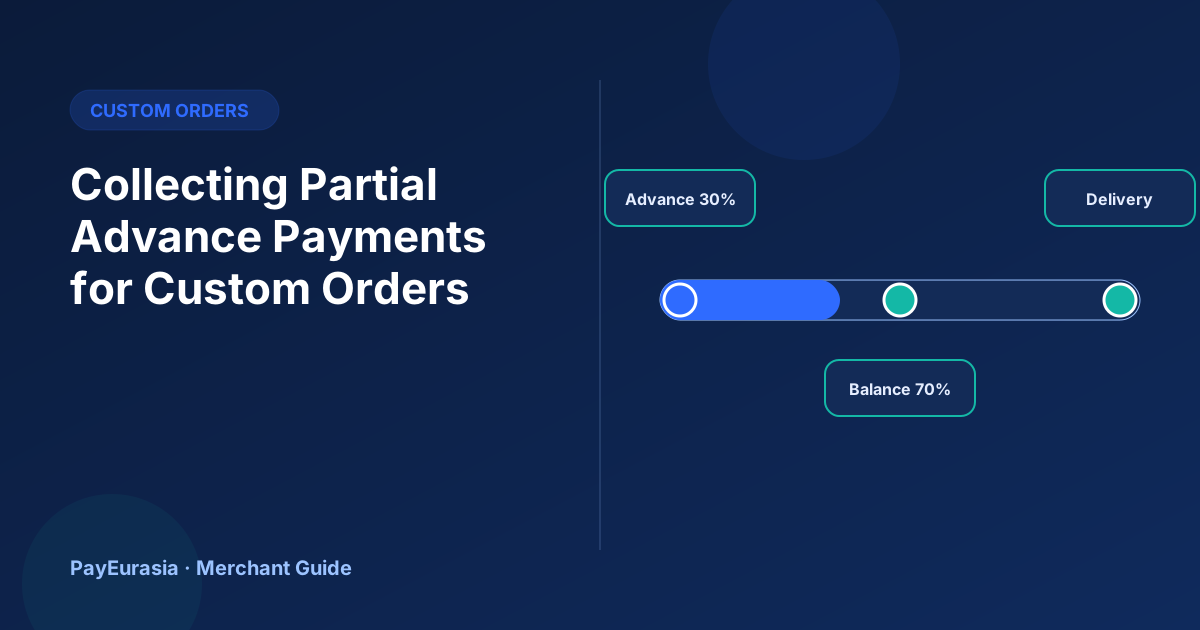
How makers and service businesses can collect an advance on custom orders, record the balance, and handle cancellations and changes fairly.
The short answer
For custom orders, agree in writing what the advance covers, how much it is, when the balance is due and what happens if the customer cancels. Record the advance and the balance as two parts of one order, and send a receipt for each payment. Clear terms before work starts prevent most disputes.
Why advances matter for custom work
A tailored suit, a printed banner or a personalised gift cannot be sold to someone else. If the customer disappears, the maker has paid for materials and time. An advance shares that risk fairly.
Deciding the amount
Base the advance on your real costs rather than a habit. A common approach is to cover materials plus a share of labour. Be consistent: customers trust a published rule more than a figure invented per conversation.
Writing the terms
Your order confirmation should state:
- Total price and what it includes.
- Advance amount and due date.
- Balance amount and when it is due (before dispatch, on delivery, on collection).
- What happens if the customer cancels before work starts, during work and after completion.
- How design changes after approval affect the price.
Keep the language simple and send it before taking any payment.
Recording two payments for one order
Use one order number, for example CU-0901, with two lines: advance and balance. Each payment should carry the order number as a reference. Your sheet or system should show the outstanding balance at any time.
Collecting the balance
Send a short message with the remaining amount, a payment link or reference, and the planned delivery date. Do not dispatch until the balance is confirmed in your records, unless your terms allow payment on delivery.
Cancellations and refunds
Apply the rule you wrote. If you keep part of the advance, explain which costs it covers. Refund through the original payment method where possible and record the refund against the same order.
Example
A furniture workshop quotes 50,000 taka for a dining table. It asks for a 15,000 advance to buy timber and the 35,000 balance before delivery. Halfway through, the customer asks for a different finish. The workshop sends a revised quote, the customer approves it in writing, and the new balance appears on the order. Everyone sees the same numbers.
Communicating progress between payments
Customers who have paid an advance want to know their order is moving. Send short updates at natural points: materials bought, work started, ready for inspection. Each update is also a chance to remind them of the balance and its due date. A photo of work in progress often answers questions before they become complaints, and makes the final balance request feel fair rather than sudden.
Frequently asked questions
Can I call the advance "non-refundable"?
You may set cancellation terms, but make them clear before payment and check consumer rules that may apply to you.
Should the advance be paid by the same method as the balance?
Not necessarily. What matters is that both are recorded against the same order.
To discuss collection tools, contact PayEurasia.
Talk to PayEurasia
Working in a high-risk vertical across South Asia? We can probably help.
Request integration →