
Payment Operations for Remote Teams: Approval and Communication Habits
By PayEurasia Editorial Team · 14 October 2026 · 2 min read
Last updated 14 October 2026
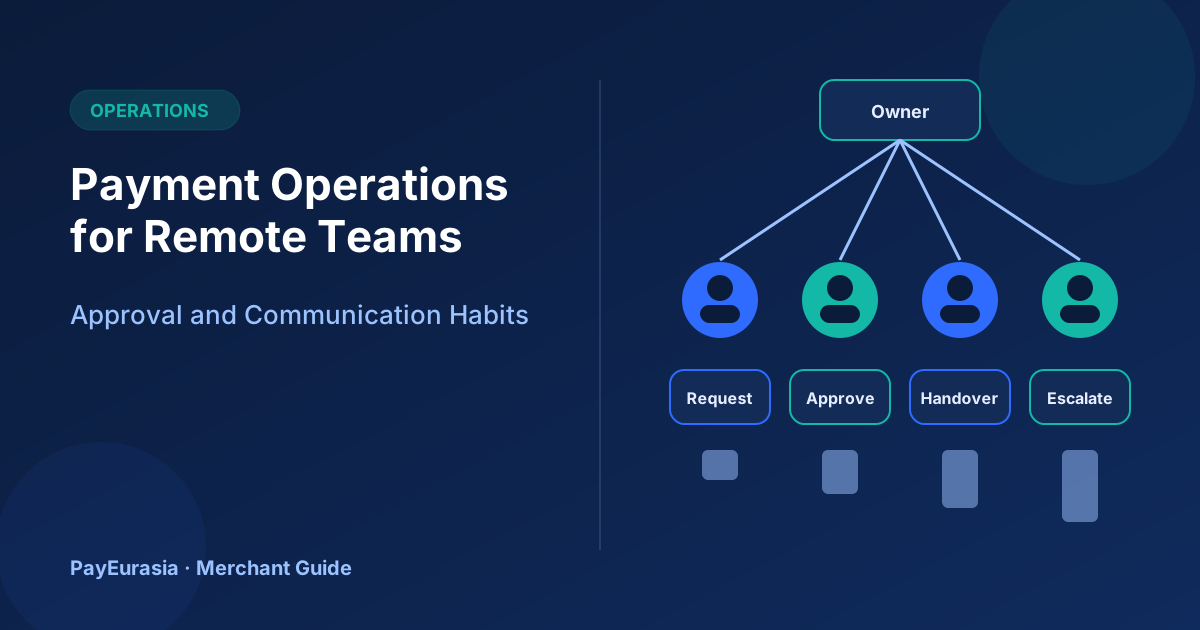
How remote and hybrid teams can run payment operations safely with written approvals, shift handovers, verified communication channels and clear escalation paths.
The short answer
Remote payment teams stay safe when sensitive actions need written approval in a known channel, handovers between people and time zones are written down, and urgent requests are verified through a second channel before anyone acts. Clear habits protect against both honest mistakes and impersonation scams that target busy teams.
The risks for remote teams
- Requests by chat that look urgent and come from someone posing as a manager.
- Approvals given verbally and never recorded.
- Work that falls between shifts.
- Shared screenshots that leak customer data.
Approval habits
- Define which actions need approval: large refunds, payout detail changes, new users, unusual payouts.
- Use one approval channel, such as a ticket or a dedicated workspace thread.
- The approver writes "Approved" with the item and amount; the requester then acts and confirms.
Verifying unusual requests
If a request is urgent, unusual or asks to change bank details, verify through a second known channel, for example by calling the person on a number you already have. Never trust a new number or account that appears in the same message.
Handovers
At the end of each shift, the outgoing person writes a short note:
- Open issues and their status.
- Pending refunds or approvals.
- Provider incidents.
- Anything the next person must do first.
See daily payment operations handover.
Communication hygiene
- Do not paste full customer data into chats; use order numbers.
- Do not share passwords; use individual accounts.
- Keep payment discussions in work channels, not personal ones.
Escalation paths
Write who to call for provider incidents, suspected fraud and system outages, with backup contacts for nights and holidays. Test the list occasionally.
Scenario
A finance assistant receives a chat message from "the director" asking to change a supplier's payout account urgently. Following the team's rule, she calls the director on his known number. The request is fake, and no money is lost.
Tools and records
Choose tools that keep a history: a ticketing system, a shared tracker or a dedicated channel with search. Avoid disappearing messages for payment work. Record approvals with enough detail that someone reviewing them months later understands what was approved and why.
Onboarding remote staff
Give new remote team members a short written guide: approval rules, verification steps, escalation contacts and channels. Walk through a practice example together before they handle real payments.
Review the guide every few months with the team, because tools, people and risks change over time.
Frequently asked questions
Is chat approval enough?
It can be, if it is in an agreed channel and recorded. Verbal approvals should be written down afterward.
How do we handle different time zones?
Use written handovers and agree overlap times for urgent items.
To discuss payment operations tooling, contact PayEurasia.
Talk to PayEurasia
Working in a high-risk vertical across South Asia? We can probably help.
Request integration →