
Seasonal Sale Payment Planning: A Merchant Readiness Checklist
By PayEurasia Editorial Team · 14 October 2026 · 2 min read
Last updated 14 October 2026
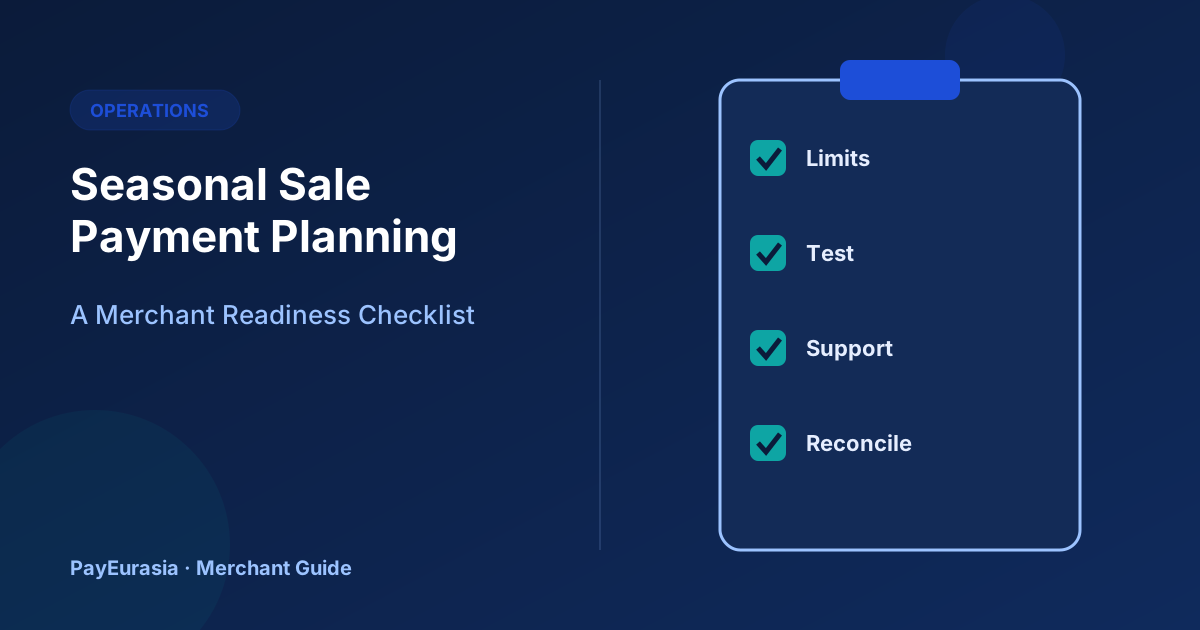
A practical readiness checklist for big seasonal sales, covering provider limits, load testing, support scripts, refunds and post-sale reconciliation.
The short answer
Before a big sale, confirm your provider limits and schedule, test checkout under realistic traffic, prepare support scripts and refund rules, and plan the reconciliation afterwards. Most sale-day payment problems are predictable: limits reached, duplicate payments from slow pages, and unanswered "I paid but no order" messages.
Four weeks before
- Tell your provider about expected volume and ask about any transaction or daily limits.
- Review the settlement schedule around the sale dates.
- Decide which payment methods to promote and confirm they are stable.
- Write the sale's refund and exchange rules.
Two weeks before
- Test checkout end to end in production with small real orders, including refunds.
- Run a load test on your site if you can, focusing on checkout pages.
- Check that the Pay button cannot be tapped twice and that orders save before redirect.
- Prepare a backup payment method in case one becomes unavailable.
One week before
- Brief support staff with scripts for pending payments, duplicates and delivery delays.
- Set up a simple monitoring view: orders created, paid, failed, by hour.
- Agree who can pause a payment method or the sale if something breaks.
- Confirm stock counts so you do not take payment for items you cannot ship.
Sale day
- Check the monitoring view regularly.
- Watch for spikes in failed or pending payments, which may indicate a provider issue.
- Pause promotions on a failing method rather than letting customers retry repeatedly.
- Record incidents with times and actions.
After the sale
- Reconcile paid orders against provider reports.
- Find and refund duplicate payments.
- Answer pending support tickets.
- Review what went wrong and what to change next time.
Things to avoid
- Changing the checkout or payment plugin the day before the sale.
- Promising "instant" refunds or delivery you cannot guarantee.
- Discounts that create totals different from the payment page.
Roles on sale day
Assign named people to each area: one person watching payment status and provider communication, one leading customer support, one handling stock and order exceptions, and one decision-maker who can pause methods or promotions. Agree how they will communicate, for example a single group chat for incidents. Keep the list of provider support contacts and escalation steps where everyone can find it.
Customer communication
Publish the sale's delivery times and refund rules on the sale page and in confirmation messages. If something goes wrong, post a short status update quickly; silence creates more support tickets than the problem itself.
Learning for next time
After the sale, write down the three biggest issues and their causes, and turn each into a task for the next sale.
Frequently asked questions
Do I need to tell my provider about a sale?
It is good practice for large expected volumes; the provider can tell you about limits or monitoring.
How do I spot duplicate payments quickly?
Look for the same customer paying the same amount for the same items within a short time.
To discuss collection options for high-volume periods, contact PayEurasia.
Talk to PayEurasia
Working in a high-risk vertical across South Asia? We can probably help.
Request integration →