
Shopify Payments in Bangladesh: Evaluating Third-Party Gateways
By PayEurasia Editorial Team · 14 October 2026 · 2 min read
Last updated 14 October 2026
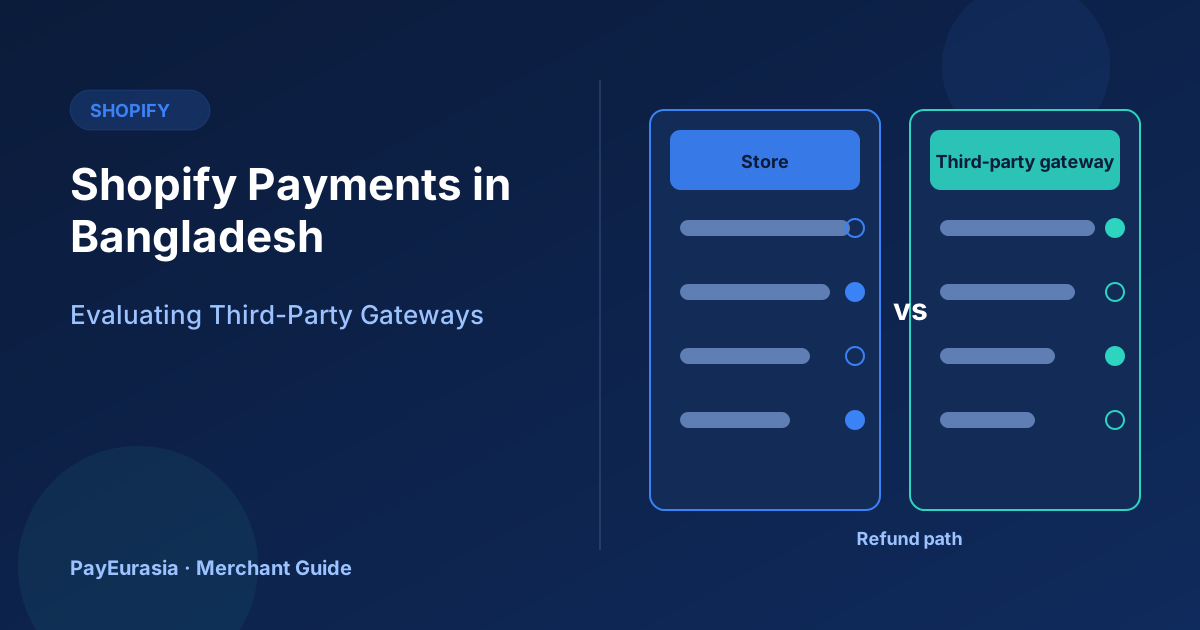
What Bangladeshi Shopify merchants should check when Shopify Payments is not available, including third-party gateway setup, order status and refund handling.
The short answer
If Shopify's own payment product is not available for your business location, you will usually add a third-party payment provider through Shopify's payment settings. Before choosing one, confirm that it is officially listed for your store's country, that payments update Shopify orders automatically, and how refunds are handled. Shopify explains the options in its third-party payment provider documentation.
This is evaluation guidance, not a claim that any particular gateway, including PayEurasia, has a Shopify app.
How third-party gateways work on Shopify
Shopify controls its checkout. A third-party provider normally appears as a payment option that sends the buyer to the provider's page or wallet, then reports the result back. Shopify may charge its own transaction fee when you use a third-party provider, depending on your plan. Check the current Shopify plan details and the provider's pricing together to understand the real cost.
What to check before installing
- Availability: is the provider listed for Bangladesh in your Shopify admin?
- Methods: which wallets, cards or bank options does it actually offer to your buyers?
- Status updates: does the order become paid automatically, or must staff mark it manually?
- Refunds: can a refund be issued from Shopify, or only in the provider portal?
- Support: who helps when a payment is taken but the order is not created?
Manual payment methods are different
Shopify also allows "manual" payment methods such as bank deposit or cash on delivery. These do not verify payment. Staff must check the bank or wallet record and mark the order paid. That is workable at low volume but becomes risky as orders grow, because it depends on matching references by hand.
Evaluation scorecard
Score each candidate from 1 to 3 on:
- Order status accuracy in test orders.
- Clarity of fees, including any Shopify transaction fee.
- Refund workflow.
- Report export for reconciliation.
- Quality of setup documentation.
Write down the evidence for each score, such as a test order number, rather than relying on a sales call.
A practical scenario
A clothing store owner tests two providers. Provider A updates orders instantly but only supports refunds in its own portal. Provider B supports refunds from Shopify but needs a manual daily report download. The owner chooses A for accuracy and writes a short refund procedure for staff. The decision is based on how the team will work, not on headline features.
Frequently asked questions
Can I switch gateways later?
Yes, but keep the old provider active until all open refunds and disputes are finished.
Is cash on delivery still useful?
For many stores, yes. See our cash on delivery vs prepaid framework.
To discuss collection options for your store, contact PayEurasia.
Talk to PayEurasia
Working in a high-risk vertical across South Asia? We can probably help.
Request integration →